
Here’s a reality check that might surprise you: While you’re busy perfecting your products and services, over 97% of your potential customers are making buying decisions based on what they see in just 30 seconds of Google searching. That’s right—before they even step foot in your store or pick up the phone to call you.
In the bustling streets of India’s commercial districts, from Delhi’s Karol Bagh to Chennai’s T. Nagar, traditional word-of-mouth marketing is rapidly giving way to “Google-of-mouth” recommendations. Your customers aren’t asking their neighbors for business recommendations anymore—they’re asking their smartphones. And if your business isn’t showing up in those crucial search results with compelling information, photos, and reviews, you’re essentially handing over your potential customers to competitors on a silver platter.
The Local Search Revolution in India: Why SMEs Can’t Afford to Ignore It
India’s small and medium enterprises are experiencing a digital transformation like never before. With over 6.3 crore MSMEs contributing significantly to the country’s GDP, the race for local visibility has intensified. Here’s what’s happening on the ground:
When Priya, a working mother in Bangalore, needs a reliable plumber for her leaking kitchen tap, she doesn’t flip through the Yellow Pages or ask neighbors anymore. She pulls out her smartphone and searches “emergency plumber near Koramangala.” Within seconds, Google presents her with a list of nearby plumbers, complete with ratings, photos of previous work, and real-time availability.
This isn’t an isolated incident. It’s the new reality for millions of Indians who are increasingly relying on local search to find businesses. The shift is so profound that businesses without a strong Google Business Profile presence are essentially invisible to a growing segment of potential customers.
The Mobile-First Indian Consumer
India’s digital landscape is uniquely mobile-centric. Unlike Western markets that transitioned from desktop to mobile, India leapfrogged directly to smartphones. This means that local search behavior in India is predominantly mobile, immediate, and location-driven.
Consider these scenarios that play out thousands of times daily across Indian cities:
- A college student in Pune searching for “budget biryani delivery” during late-night study sessions
- A business executive in Gurgaon looking for “car service center” after an unexpected breakdown
- A new mother in Chennai seeking “pediatrician near Velachery” for her infant’s vaccination
Each of these searches represents a business opportunity that could land in your lap—or slip away to a competitor with better local SEO optimization.
Understanding Google Business Profile: Your Digital Business Card on Steroids
Think of Google Business Profile (formerly Google My Business) as your business card, but one that’s incredibly smart. It knows when to appear, what information to show, and how to convince potential customers to choose you over the competition.
Your Google Business Profile is like having a 24/7 sales representative who never takes a day off. It works while you sleep, answers questions when you’re busy, and showcases your best work even when you’re not around to do it yourself.
Unlike traditional advertising where you cast a wide net and hope for the best, GBP targets customers who are already looking for what you offer. It’s the difference between shouting in a crowded marketplace and having someone tap you on the shoulder saying, “I need exactly what you’re selling.”
The Trust Factor in Indian Business Culture
In India, trust plays a crucial role in business relationships. Before a customer walks into your store or calls your service, they want to know:
- Are you legitimate and established?
- What do other customers say about you?
- Are you easily accessible and responsive?
- Do you understand local needs and preferences?
Your Google Business Profile addresses all these concerns by displaying customer reviews, business hours, contact information, and photos that establish credibility before the first interaction.
The Current State of Local Search: Why Now is the Perfect Time
The pandemic accelerated digital adoption among Indian SMEs by at least five years. Businesses that previously relied solely on word-of-mouth referrals and walk-in customers suddenly found themselves needing an online presence to survive.
This digital shift has created both challenges and opportunities:
Challenges:
- Many SMEs lack technical expertise to optimize their online presence
- Budget constraints limit investment in digital marketing
- Resistance to change from traditional business practices
- Lack of understanding about local SEO benefits
Opportunities:
- Lower competition in local search compared to global markets
- Cost-effective way to reach targeted local customers
- Ability to compete with larger businesses on equal footing
- Direct connection with mobile-first Indian consumers
The Local Search Behavior of Indian Consumers
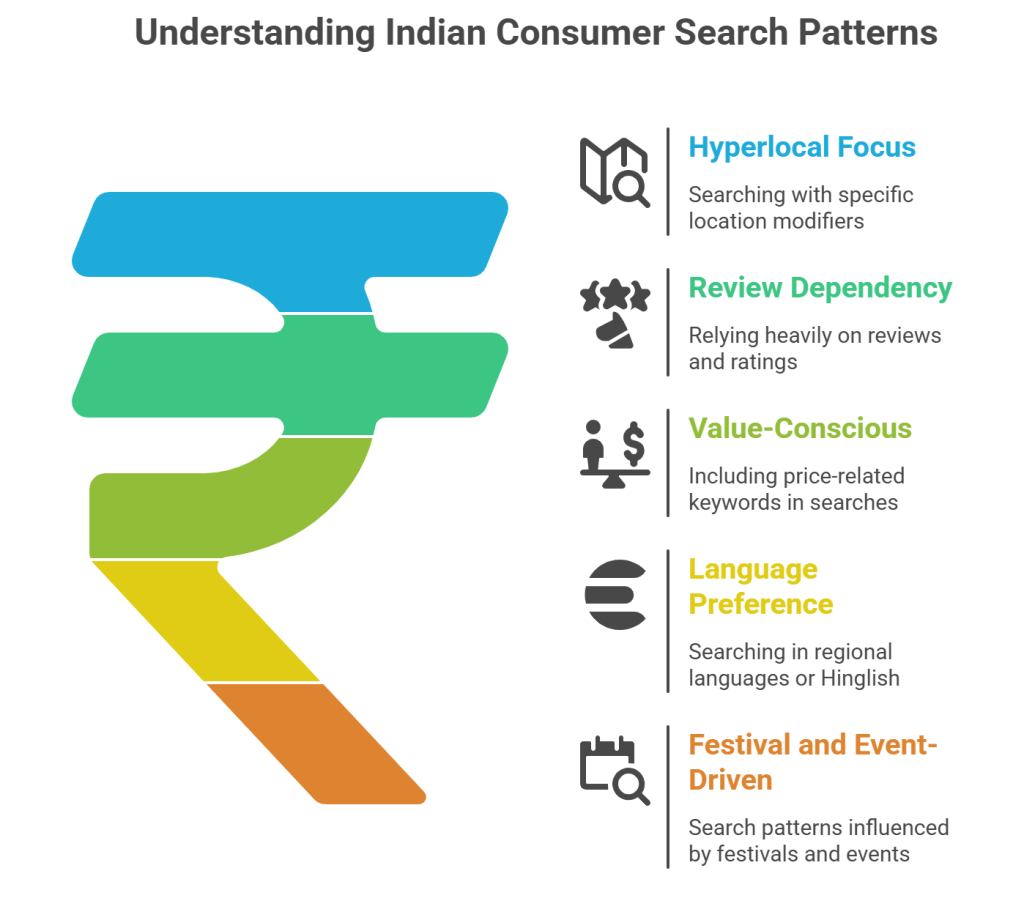
Indian consumers exhibit unique local search patterns that smart SMEs can leverage:
- Hyperlocal Focus: Indians search with very specific location modifiers. Instead of just “restaurant,” they search for “restaurant in Bandra West” or “restaurant near Phoenix Mall”
- Review Dependency: Indian consumers heavily rely on reviews and ratings, often reading through multiple reviews before making decisions
- Value-Conscious: Searches often include price-related keywords like “best price,” “affordable,” or “budget-friendly”
- Language Preference: Many searches happen in regional languages or Hinglish (Hindi-English mix)
- Festival and Event-Driven: Search patterns fluctuate based on festivals, seasons, and local events
The Anatomy of a Winning Google Business Profile
Creating an outstanding Google Business Profile is like preparing for a job interview where you have just seconds to make a great first impression. Every element must work together to tell a compelling story about your business.
Business Information: Getting the Basics Right
- Your business name should be exactly as it appears on your signboard and legal documents. Don’t try to stuff keywords into your business name—Google’s algorithms are smart enough to detect this, and it can actually hurt your rankings.
- For address information, be precise. Instead of just “Mumbai,” specify “Andheri West, Mumbai, Maharashtra.” This granular location data helps Google understand exactly where you serve customers and improves your chances of appearing in hyperlocal searches.
- Phone numbers should be local landline numbers when possible, as they signal to Google that you’re a legitimate local business. If you only have a mobile number, ensure it’s consistent across all your online listings.
Categories: The Foundation of Visibility
Choosing the right primary category is crucial—it tells Google what type of business you are and determines which searches you’ll appear for. Your primary category should be the most specific option that accurately describes your core business.
For example, if you run a specialty coffee shop, don’t choose the broad “Restaurant” category. Instead, select “Coffee Shop” as your primary category. You can then add secondary categories like “Bakery” or “Internet Cafe” if they apply.
Indian SMEs often make the mistake of choosing categories that are too broad, hoping to capture more searches. This strategy backfires because Google prefers specific, relevant matches over generic ones.
Business Description: Your Elevator Pitch
Your business description should sound like you’re explaining your business to a friend, not reciting a corporate brochure. Use natural language that reflects how your customers actually speak.
Instead of: “We are a leading provider of comprehensive automotive solutions with state-of-the-art facilities and experienced technicians.”
Try: “Family-owned car repair shop serving Bangalore families for over 15 years. We specialize in Maruti, Hyundai, and Honda repairs with honest pricing and same-day service for most repairs.”
Include relevant local landmarks, serving areas, and unique selling points that set you apart from competitors.
Visual Storytelling: Making Your Profile Come Alive
Photos are often the deciding factor between choosing your business or a competitor’s. Indian consumers particularly value seeing what they’re getting before they commit.
Essential Photo Categories:
- Storefront and Exterior: Show your business from the street view so customers can easily find you. Include any distinctive signage or landmarks that make location identification easier.
- Interior Shots: Give potential customers a virtual tour of your space. For restaurants, show both the dining area and kitchen (if it’s presentable). For service businesses, show your workspace to build trust.
- Products in Action: Don’t just show your products—show them being used or enjoyed. A photo of a happy customer enjoying your famous pav bhaji is worth more than a dozen product shots.
- Team Photos: Indian customers prefer dealing with businesses where they can see the people behind the service. Friendly, professional photos of your team build trust and connection.
- Behind-the-Scenes: Show your process, your ingredients being prepared, or your team at work. This transparency is especially valuable for service businesses where customers can’t see the final product before purchasing.
- Seasonal and Festival Content: Update your photos regularly to reflect festivals, seasons, and special occasions. This shows that your business is active and connected to the local community.
Video Content: The Next Frontier
While photos are essential, videos can set you apart from competitors. Consider creating short videos that:
- Show your products being made or services being performed
- Feature customer testimonials
- Highlight special offers or new arrivals
- Provide virtual tours of your facility
Reviews and Reputation Management: Building Trust in the Digital Age
Indian consumers read reviews differently than Western consumers. They look for specific details about value for money, service quality, and how the business treats customers. They’re also more likely to trust reviews that mention specific experiences rather than generic praise.
Understanding this behavior helps you encourage the right type of reviews and respond appropriately to feedback.
The best reviews come from genuinely satisfied customers, but you need to actively ask for them. Many happy customers simply don’t think to leave reviews unless prompted.
Effective Review Generation Strategies:
- The Follow-Up Approach: Send a simple WhatsApp message or email 24-48 hours after service completion, thanking customers and providing a direct link to leave a review.
- In-Person Requests: Train your staff to ask satisfied customers for reviews. The key is timing—ask when the customer is clearly pleased with the service.
- Incentive Programs: Offer small discounts or freebies for customers who leave honest reviews. Ensure you’re not paying for positive reviews, which violates Google’s policies.
- Review Cards: Provide small cards with QR codes or simple instructions for leaving reviews. This works particularly well for retail businesses.
Managing Negative Reviews
Negative reviews aren’t necessarily bad for your business—how you handle them can actually improve your reputation. Indian consumers often read negative reviews and the business’s response to gauge how the company treats customers when things go wrong.
Best Practices for Negative Review Responses:
- Respond Quickly: Aim to respond within 24 hours
- Stay Professional: Never argue or get defensive
- Take Responsibility: Acknowledge the issue without making excuses
- Offer Solutions: Provide specific steps to resolve the problem
- Move Offline: For complex issues, invite the customer to discuss privately
- Follow Up: Once resolved, ask the customer to update their review
Advanced Optimization Strategies for Competitive Markets
Once you’ve mastered the fundamentals, these advanced strategies can give you an edge over competitors in local SEO:
- Geo-Tagging Content: When you upload photos, ensure they’re geo-tagged with your business location. This provides additional location signals to Google.
- Local Link Building: Build relationships with other local businesses and organizations for mutual link sharing. Local chambers of commerce, business associations, and community groups offer valuable linking opportunities.
- Citation Consistency: Ensure your business information is identical across all online directories—Justdial, Sulekha, IndiaMART, and local directories. Inconsistent information confuses Google and can hurt your rankings.
- Local Content Marketing: Create content that addresses local issues, events, and interests. A restaurant might blog about local food festivals, while a hardware store could write about monsoon preparation tips.
Leveraging Local Events and Festivals
Indian SMEs have a unique advantage in connecting with local festivals and events. Use these opportunities to:
- Create special offers tied to local festivals
- Participate in community events and document them with photos
- Adjust your business hours for local celebrations
- Create festival-specific content and promotions
Measuring Success: Key Metrics That Matter
Google provides detailed insights about how customers find and interact with your business profile. Focus on these key metrics:
- Search Queries: See what terms customers use to find you. This helps identify new keyword opportunities and understand customer intent.
- Customer Actions: Track how many people call, visit your website, or request directions from your profile. These actions indicate strong purchase intent.
- Photo Views: Popular photos can indicate what customers are most interested in. Use this data to create similar content.
- Busiest Times: Understanding when customers search for and visit your business helps optimize staffing and promotional timing.
Competitive Benchmarking
Compare your performance with competitors to identify opportunities for improvement. Look at:
- Review ratings and response rates
- Photo quality and quantity
- Response time to customer inquiries
- Special offers and promotions
Common Mistakes That Kill Local Visibility
- The “Set and Forget” Mentality Many Indian SMEs create their Google Business Profile and then never update it. This approach is like planting a garden and never watering it. Regular updates signal to Google that your business is active and relevant.
- Keyword Stuffing Trying to cram every possible keyword into your business description or posts makes your content sound robotic and can actually hurt your rankings. Focus on natural, helpful content that serves your customers.
- Ignoring Customer Questions The Q&A section of your profile is often overlooked but extremely valuable. Customers frequently ask about pricing, availability, and services. Proactive businesses answer common questions before they’re asked.
- Inconsistent Business Hours Nothing frustrates customers more than arriving at a closed business that’s listed as open online. Keep your hours updated, especially during festivals and holidays.
The Road Ahead: Preparing for the Future of Local Search
Voice search is becoming increasingly important as more Indians use smartphones and smart speakers. Optimize for conversational queries like “Where can I get the best dosa near me?” rather than just “dosa restaurant.”
Visual search is also growing, where customers take photos of products they want and search for similar items or services. High-quality, well-tagged photos become even more important in this context.
AI and Local Search Google’s AI algorithms are becoming better at understanding user intent and local context. This means businesses that focus on genuinely serving their local community will be rewarded over those trying to game the system.
Taking Action: Your 30-Day GBP Optimization Plan
Week 1: Foundation Setting
- Claim and verify your Google Business Profile
- Complete all basic information fields
- Choose appropriate categories
- Upload 10-15 high-quality photos
Week 2: Content and Engagement
- Write compelling business descriptions
- Create your first Google Posts
- Set up automated review request system
- Respond to any existing reviews
Week 3: Advanced Features
- Add products or services listings
- Create special offers or promotions
- Set up messaging if available in your area
- Optimize for local keywords
Week 4: Monitoring and Refinement
- Analyze performance data
- Identify areas for improvement
- Plan ongoing content strategy
- Set up monthly review processes
Remember, Google Business Profile optimization isn’t a one-time task—it’s an ongoing investment in your business’s digital presence. In India’s rapidly evolving digital landscape, SMEs that master local search today will be the ones thriving tomorrow. Start with the basics, be consistent, and always prioritize serving your customers over gaming the system. Your future customers are searching for you right now—make sure they can find you.