

If you’ve ever wondered “what is digital marketing” and why everyone seems to be talking about it, you’re in the right place. In today’s interconnected world, digital marketing has become the backbone of successful businesses, transforming how companies connect with their audiences and drive growth.
Whether you’re a business owner looking to expand your reach, a student considering a career change, or simply curious about this dynamic field, this comprehensive guide will walk you through everything you need to know about digital marketing in plain, easy-to-understand language.
Understanding Digital Marketing: The Basics
Digital marketing, also known as online marketing or internet marketing, is the practice of promoting products, services, or brands through digital channels and platforms. Unlike traditional marketing methods that rely on print, radio, or television, digital marketing leverages the power of the internet and digital technologies to reach and engage with target audiences.
At its core, digital marketing is about being where your customers are – and today, that’s predominantly online. With over 4.9 billion internet users worldwide, the digital landscape offers unprecedented opportunities for businesses to connect with potential customers across the globe.
The Evolution of Marketing: From Traditional to Digital
The shift from traditional to digital marketing didn’t happen overnight. It’s been a gradual evolution driven by changing consumer behaviors and technological advancements. Here’s how we got here:
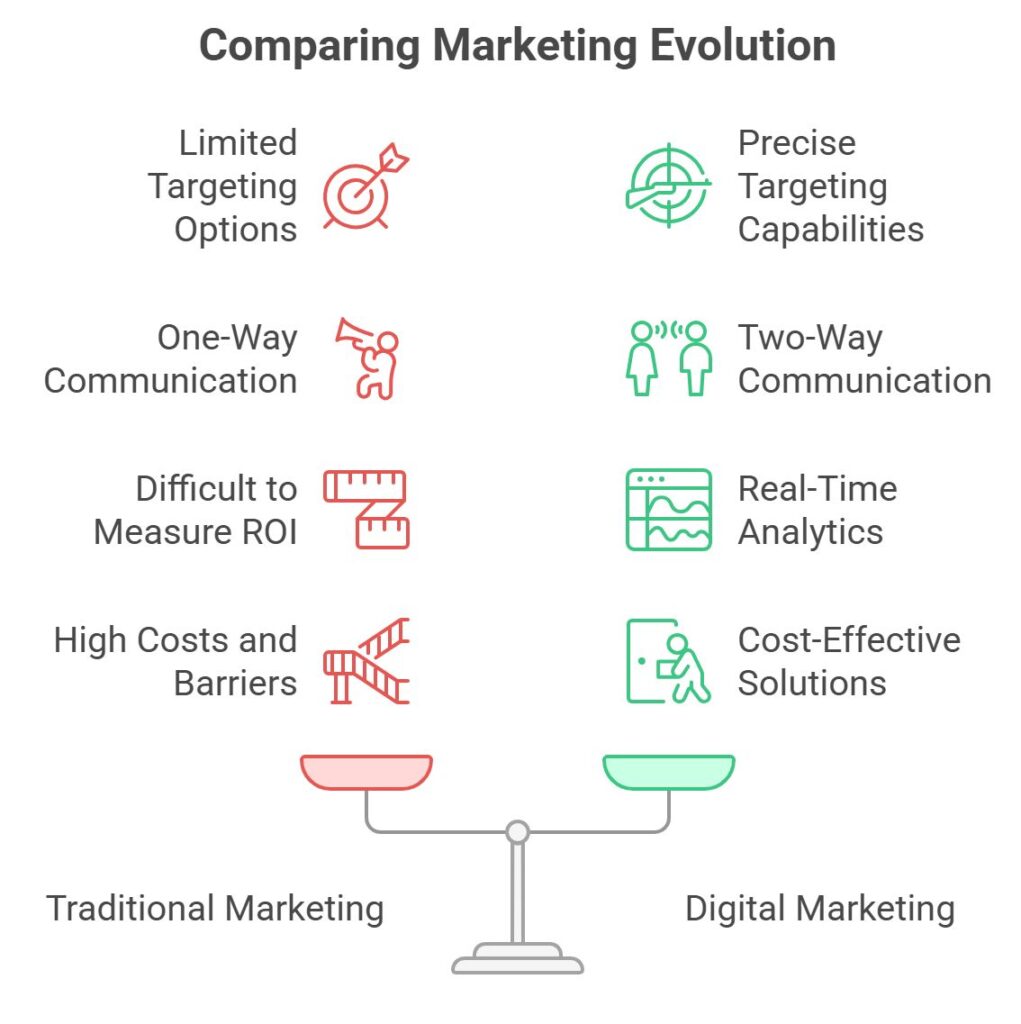
Traditional Marketing Era
- Limited targeting options
- One-way communication
- Difficult to measure ROI
- High costs and barriers to entry
- Limited reach and geographic constraints
Digital Marketing Revolution
- Precise targeting capabilities
- Two-way communication and engagement
- Real-time analytics and measurement
- Cost-effective solutions for all business sizes
- Global reach with local personalization
Core Components of Digital Marketing
Digital marketing encompasses various strategies and tactics, each serving specific purposes in your overall marketing strategy:
1. Search Engine Optimization (SEO)
SEO is the art and science of optimizing your website and content to rank higher in search engine results pages (SERPs). When someone searches for products or services related to your business, SEO helps ensure your website appears prominently in the results.
Key SEO Elements:
- Keyword research and optimization
- On-page optimization (title tags, meta descriptions, content)
- Technical SEO (site speed, mobile-friendliness, crawlability)
- Off-page SEO (link building, local citations)
- Content optimization and user experience
2. Content Marketing
Content marketing involves creating and sharing valuable, relevant content to attract and retain a clearly defined audience. It’s about providing value first, building trust, and establishing your brand as an authority in your industry.
Popular Content Types:
- Blog posts and articles
- Videos and podcasts
- Infographics and visual content
- E-books and whitepapers
- Case studies and testimonials
- Social media posts
3. Social Media Marketing
Social media marketing uses platforms like Facebook, Instagram, Twitter, LinkedIn, and TikTok to build brand awareness, engage with audiences, and drive website traffic. Each platform has its unique characteristics and audience demographics.
Social Media Benefits:
- Direct communication with customers
- Brand personality development
- Community building
- Customer service and support
- Viral marketing potential
4. Pay-Per-Click (PPC) Advertising
PPC advertising allows businesses to display ads on search engines and other platforms, paying only when someone clicks on their ad. Google Ads is the most popular PPC platform, but social media platforms also offer robust advertising options.
PPC Advantages:
- Immediate visibility and results
- Precise targeting options
- Budget control and flexibility
- Measurable ROI
- A/B testing capabilities
5. Email Marketing
Despite being one of the oldest digital marketing channels, email marketing remains highly effective. It involves sending targeted messages to a list of subscribers who have opted in to receive communications from your business.
Email Marketing Benefits:
- High ROI (average of $42 for every $1 spent)
- Direct communication channel
- Personalization opportunities
- Automation capabilities
- Measurable results
6. Affiliate Marketing
Affiliate marketing involves partnering with other businesses or individuals (affiliates) who promote your products in exchange for a commission on sales. It’s a performance-based marketing strategy that can significantly expand your reach.
7. Influencer Marketing
Influencer marketing leverages the reach and credibility of social media influencers to promote products or services. It’s particularly effective for reaching younger demographics and building brand trust.
Digital Marketing Strategies: Inbound vs. Outbound
Understanding the difference between inbound and outbound marketing is crucial for developing effective digital marketing strategies:
Inbound Marketing
Inbound marketing focuses on attracting customers through valuable content and experiences. It’s about being helpful and providing solutions to your audience’s problems.
Inbound Tactics:
- SEO-optimized blog content
- Social media engagement
- Email newsletters
- Webinars and educational content
- Free tools and resources
Outbound Marketing
Outbound marketing involves actively reaching out to potential customers, often interrupting their online experience to deliver your message.
Outbound Tactics:
- Display advertising
- Social media ads
- Email campaigns to purchased lists
- Cold calling and messaging
- Pop-up advertisements
Why Digital Marketing Matters for Your Business
The importance of digital marketing extends far beyond just having an online presence. Here’s why it’s essential for modern businesses:
1. Cost-Effectiveness
Digital marketing offers better ROI compared to traditional marketing methods. Small businesses can compete with larger companies by leveraging targeted digital strategies without massive budgets.
2. Measurable Results
Unlike traditional marketing, digital marketing provides detailed analytics and metrics. You can track website visits, conversion rates, engagement levels, and ROI in real-time.
3. Targeted Reach
Digital marketing allows precise targeting based on demographics, interests, behaviors, and location. This ensures your message reaches the right people at the right time.
4. Global Reach
The internet breaks down geographical barriers, allowing businesses to reach customers worldwide without physical presence in multiple locations.
5. Flexibility and Adaptability
Digital marketing campaigns can be quickly adjusted based on performance data. This agility allows businesses to respond to market changes and optimize their strategies continuously.
6. Customer Insights
Digital platforms provide valuable data about customer behavior, preferences, and journey patterns, helping businesses make informed decisions.
The Digital Marketing Landscape in 2025
The digital marketing landscape continues to evolve rapidly. Here are some key trends shaping the industry:
Artificial Intelligence and Machine Learning
AI is revolutionizing digital marketing through:
- Personalized content recommendations
- Predictive analytics
- Chatbots and customer service automation
- Dynamic pricing optimization
- Automated ad targeting
Voice Search Optimization
With the rise of smart speakers and voice assistants, optimizing for voice search has become crucial for businesses wanting to stay competitive.
Video Marketing Dominance
Video content continues to gain popularity, with platforms like YouTube, TikTok, and Instagram Reels driving engagement and conversions.
Privacy and Data Protection
With increasing concerns about data privacy, marketers must adapt to new regulations and focus on building trust with transparent data practices.
Getting Started with Digital Marketing
Ready to dive into digital marketing? Here’s a step-by-step approach:
Step 1: Define Your Goals
- Increase brand awareness
- Generate leads
- Drive sales
- Improve customer retention
- Build community
Step 2: Identify Your Target Audience
- Demographics (age, gender, location)
- Psychographics (interests, values, lifestyle)
- Behavioral patterns
- Pain points and challenges
- Preferred communication channels
Step 3: Choose Your Digital Marketing Channels
Start with 2-3 channels that align with your audience and goals, then expand as you gain experience and resources.
Step 4: Create Valuable Content
Focus on providing value to your audience rather than just promoting your products or services.
Step 5: Measure and Optimize
Use analytics tools to track performance and continuously improve your strategies based on data insights.
Common Digital Marketing Mistakes to Avoid
Learning from common mistakes can save you time and resources:
1. Trying to Be Everywhere at Once
Focus on mastering a few channels rather than spreading yourself too thin across all platforms.
2. Ignoring Mobile Optimization
With over 50% of web traffic coming from mobile devices, mobile optimization is no longer optional.
3. Not Defining Clear Goals
Without clear objectives, it’s impossible to measure success or make informed decisions.
4. Focusing Only on Acquisition
While attracting new customers is important, don’t neglect existing customer relationships and retention strategies.
5. Neglecting Analytics
Data-driven decisions are crucial for digital marketing success. Regularly review and analyze your performance metrics.
Building Your Digital Marketing Career
The digital marketing industry offers numerous career opportunities:
Entry-Level Positions
- Digital Marketing Assistant
- Social Media Coordinator
- Content Writer
- SEO Analyst
- Email Marketing Specialist
Mid-Level Roles
- Digital Marketing Manager
- Social Media Manager
- Content Marketing Manager
- PPC Specialist
- Marketing Automation Specialist
Senior-Level Positions
- Digital Marketing Director
- Chief Marketing Officer
- Marketing Strategy Consultant
- Agency Owner
- Marketing Technology Specialist
The Future of Digital Marketing
As technology continues to advance, digital marketing will evolve in exciting ways:
Emerging Technologies
- Augmented Reality (AR) and Virtual Reality (VR)
- Blockchain for transparent advertising
- Internet of Things (IoT) marketing
- Advanced chatbots and conversational AI
Changing Consumer Behaviors
- Increased demand for personalization
- Growing importance of social responsibility
- Preference for authentic, transparent communication
- Mobile-first expectations
Conclusion
Understanding what is digital marketing is just the beginning of your journey into this exciting and dynamic field. Digital marketing has fundamentally changed how businesses connect with their audiences, offering unprecedented opportunities for growth, engagement, and success.
Whether you’re looking to grow your business, advance your career, or simply stay informed about the digital world around us, the principles and strategies outlined in this guide provide a solid foundation for success. Remember, digital marketing is not just about technology – it’s about people, relationships, and providing value in an increasingly connected world.
The key to success in digital marketing lies in continuous learning, experimentation, and adaptation. Start with the basics, focus on your audience’s needs, and gradually expand your knowledge and skills. With dedication and the right approach, you can harness the power of digital marketing to achieve your goals and make a meaningful impact in the digital landscape.